Physical Address
304 North Cardinal St.
Dorchester Center, MA 02124
Physical Address
304 North Cardinal St.
Dorchester Center, MA 02124

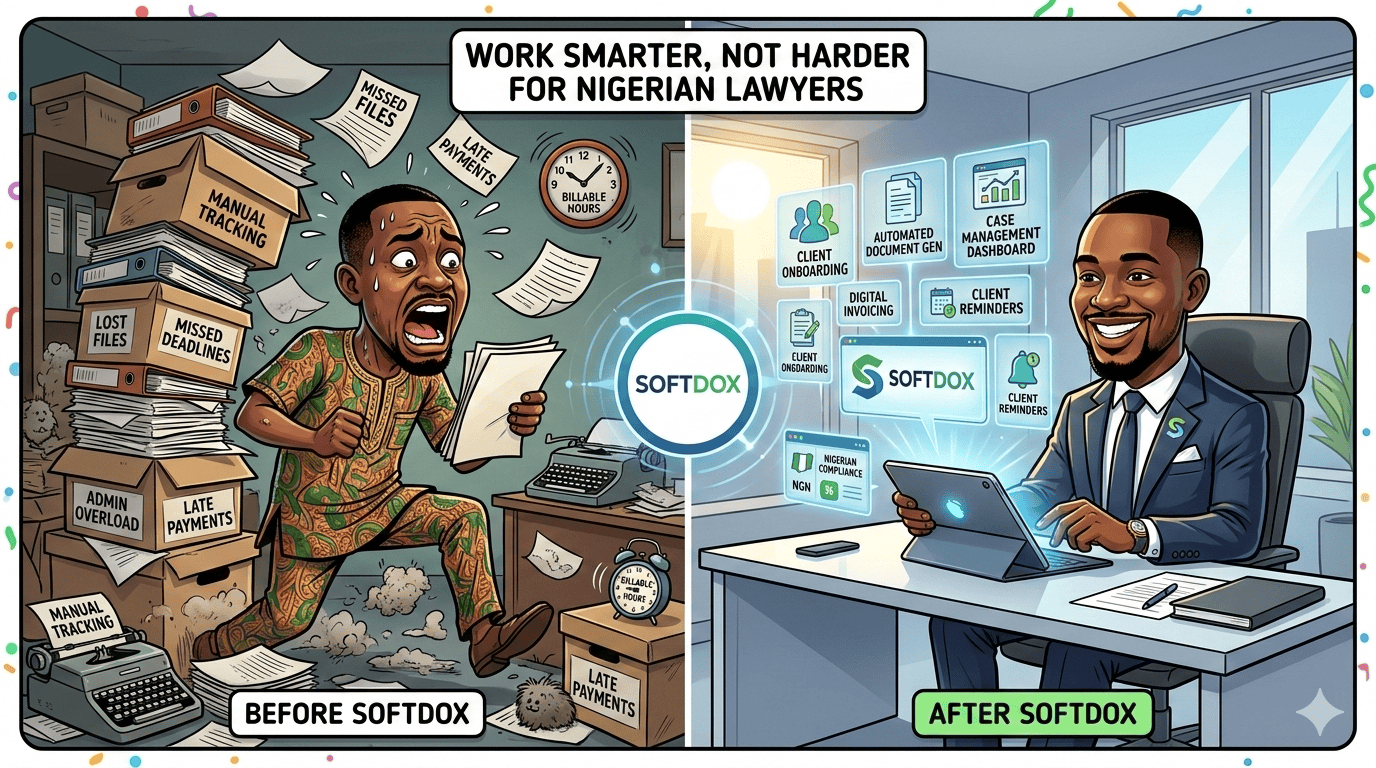
The modern Nigerian legal practitioner is under increasing pressure—more clients to attend to, more deadlines to meet, more documents to prepare, and an overwhelming amount of administrative tasks that keep piling up. Yet, the truth is simple: lawyers didn’t go to law school to drown in paperwork or spend their days chasing files.
Technology has already transformed finance, transportation, commerce, and banking. Now, it’s reshaping legal practice. Law firms that embrace automation are not only improving efficiency—they are reducing cost, increasing client satisfaction, and positioning themselves as future-ready.
But how exactly can Nigerian lawyers automate their daily operations? And what tools make it possible? In this article, we will show you how Nigerian Lawyers can automate their daily operations with tech.
Automation in the legal space is not about replacing lawyers; it’s about elevating them. Here’s why smart law firms are prioritizing automation right now
1. Time saving: Routine tasks like drafting repetitive documents, sorting files, follow-up reminders, scheduling meetings, and tracking case timelines waste countless hours weekly. Automation gives those hours back.
2. Reduced errors: Manual processes increase the likelihood of oversight—missed deadlines, incorrect citations, double bookings, misplaced documents. Automation introduces structure, accuracy, and consistency.
3. Better client experience: Today’s clients expect the same seamless experience they get from fintech apps and e-commerce platforms. Automation helps law firms respond faster, communicate better, and build trust.
4. Increased profitability: Less time spent on admin work equals more time for billable hours. Plus, automated systems reduce operational costs.
5. Competitive advantage: Clients are choosing efficiency over tradition. Law firms that adopt tech now stand out in an increasingly crowded legal market.
Not every law firm needs a complex system to begin. Whether you are a solo practice or a growing firm, the following areas are perfect for starting your automation journey;
1. Client Onboarding: Think of how much time lawyers spend gathering client information, booking consultations, and answering repetitive questions. Automation simplifies all of it.
2. Document Automation: From contracts to affidavits, tenancy agreements to NDAs—legal practice is document-heavy. Many of these documents follow a pattern.
3. Case File Management System and Workflow: A big reason lawyers burn out is that case tracking is scattered—WhatsApp messages here, files there, deadlines somewhere else. Case File management system helps track case timelines effortlessly, set reminders for court dates and filings, assign tasks to associates, monitor case progress from one dashboard, organize client communication and keep digital records of everything.
Your system automatically alerts you 48 hours before a filing deadline. It also sends your client a reminder for required documents—without you lifting a finger. That’s the peace of mind automation brings.
4. Billing, Payment, and Accounting: Late payments are a universal frustration for Nigerian lawyers. But automated billing changes everything. You can generate invoices automatically, set recurring payments for retainers, offer clients multiple payment channels, track unpaid invoices, send automated payment reminder and produce accounting reports instantly
5. Client Communication and Follow-up: Many lawyers lose clients not due to competence, but due to inconsistent communication. Automation solves this. With automation, your clients always feel attended to—even when you’re in court.
6. Calendar and Appointment Scheduling: If you still manually schedule meetings or remind clients about court dates, you are wasting valuable hours. With automation, you can set court reminders, client meetings and team deadlines
7. File and Document Storage: Losing a court document is one of the fastest ways to ruin a case. Automation through cloud storage means files are stored securely, you can access files anywhere, and organized folders
There are hundreds of legal tools globally, but Nigerian law firms need solutions tailored to local realities—payment systems that work here, workflows that reflect Nigerian court structures, task management that suits our practice style. Just like how Cowrywise simplifies savings and PiggyVest automates financial discipline, SOFTDOX brings structure, automation, and clarity into legal practice.
With SOFTDOX, lawyers can automate: Client onboarding; Case management; Billing and payments; Internal collaboration with teammates; Client communications and Document storage.
What makes SOFTDOX perfect for Nigerian lawyers you ask? We know the market and we are aware of the ecosystem around us. SOFTDOX is a perfect fit for your law firm because we integrate local compliance considerations, local payment options, simple user interface and affordable pricing.
SOFTDOX is perfect for both solo and medium-sized law firms. This is not just technology; it’s a partner that helps you run your law firm efficiently.
Globally, legal tech adoption is rising rapidly. Nigerian lawyers who embrace automation early are positioning themselves for higher revenue, better client retention, smoother operations, less stress and burnout, improved accuracy and professional brand perception
Clients trust law firms that appear organized and capable.
Nigerian lawyers who embrace technology today will own tomorrow’s legal market. Automation does not take away the human element of legal work—it frees lawyers to focus on the part of the job that truly matters: strategy, legal reasoning, negotiations, and advocacy.
Your law firm doesn’t need to become a big tech-driven organization to start. It only needs the right tool—and the willingness to operate smarter. And with SOFTDOX, automation becomes simpler, faster, affordable, and designed specifically for the Nigerian legal environment.