Physical Address
304 North Cardinal St.
Dorchester Center, MA 02124
Physical Address
304 North Cardinal St.
Dorchester Center, MA 02124


“It looked great, but it was too slow”
“I couldn’t figure out how to navigate the site, so I left”.“
It worked fine on my laptop, but not on my phone.”
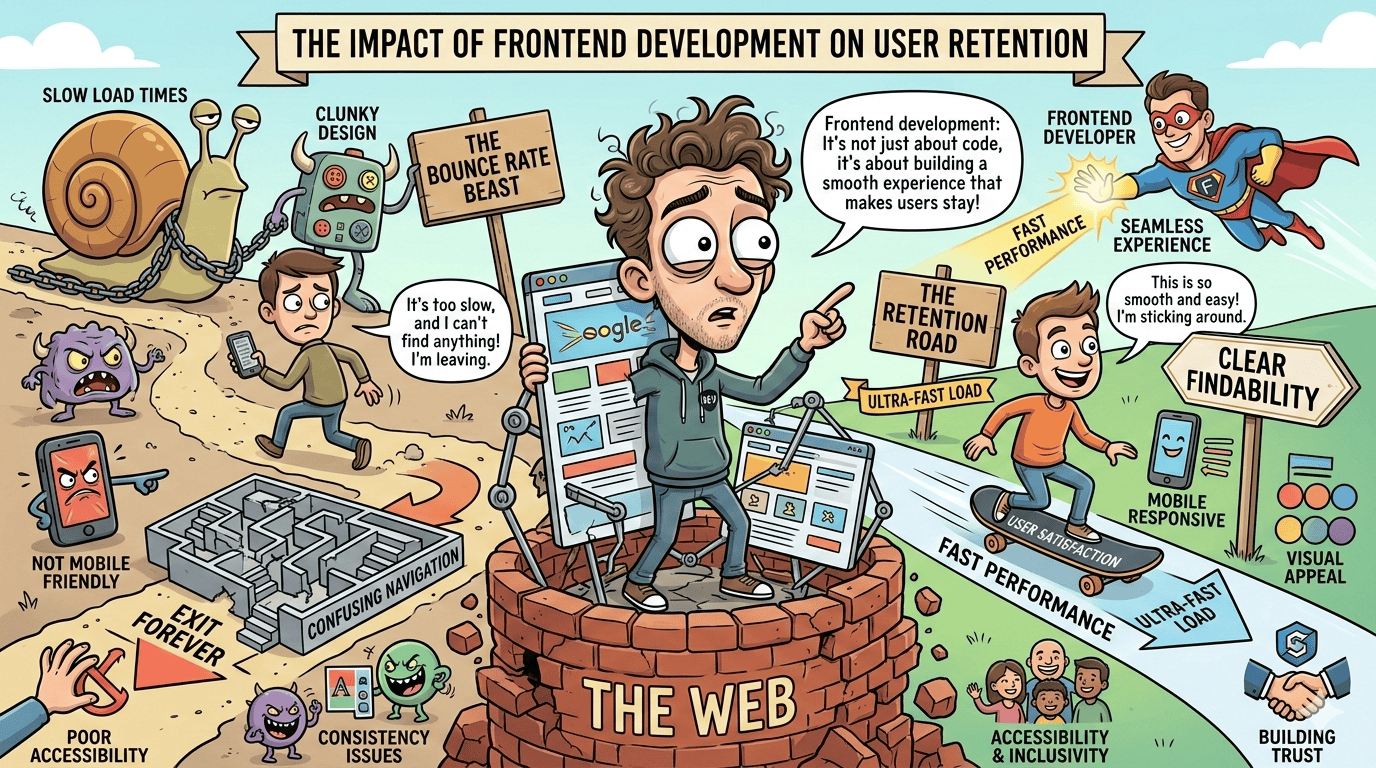
These words are common nightmares of front-end developers but, the real question is how do we fix them to make users stay longer on the website?
As front-end developers, we’re often judged within seconds of encounter. A user lands on a website or opens an app, and before they even read a word, they subconsciously decide whether they trust the experience. If the design is clunky, or if the page takes too long to load. In worst scenarios, if they can’t find what they need instantly, they’re gone, possibly forever.
In today’s digital world, getting people to visit your website or app isn’t the hard part, but ensuring they stay on the website is where the challenge lies and in the business world, it is called User Retention. User retention is one of the biggest challenges businesses face.
A beautiful UI is nice, but if the experience doesn’t feel smooth, fast, and intuitive, users won’t stick around. That’s why frontend development isn’t just about writing code, it’s about designing an experience that keeps users engaged, comfortable, and coming back.
So, let’s break down why frontend development is the secret weapon for user retention and what you can do to make sure your users don’t leave after the first click.
User retention refers to how well a website or application keeps users coming back over time. It’s a direct indicator of how effective your product is.
If users are not being retained on a website, it’s usually a sign that something in the experience is not working for them.
Some key metrics to track user retention:
• Bounce Rate: The percentage of visitors who leave after viewing just one page.
• Time on Site: How long users stay engaged before leaving.
• Return Visitors: The number of users who come back after their first visit.
• Session Duration: The total time a user spends on the platform.
User retention matters because it is more cost-effective than constantly acquiring new users Studies show that increasing customer retention by just 5% can boost profits by 25-95%.
And guess what? Your front-end decisions determine if those numbers go up or down.
A great front-end doesn’t just look good, it guides users effortlessly through an experience that feels natural and rewarding. Here are some ways front-end decisions impact user retention:
Users don’t have time to wait. About 53% of users will abandon a website if it takes more than 3 seconds to load. If a page lags, users won’t even get a chance to see your brilliant design or interact with your product. Hence, speed gives the first impression.
How do you now improve your website speed and performance?
Even a 0.1-second improvement in load time can boost conversion rates by 8-10%. That little difference determines a user staying or bouncing.
The experience should work everywhere. More than 50% of web traffic comes from mobile devices. If your site doesn’t adapt seamlessly, you’ve just lost half of your potential users.
Some common mobile mistakes are:
How to make your site mobile-friendly:
If a user has a frustrating mobile experience, they won’t bother checking again on a desktop. They’ll just leave for good.
Users shouldn’t feel lost. If you have ever visited a website where you had to “figure out” how to use it, you’ll know how frustrating it can be. Users should never have to think too hard about where to go next. Navigating your website should feel intuitive. Some best practices for seamless navigation are:
A smooth experience reduces cognitive load, making users more likely to stay.
First impressions matter. A modern, clean UI isn’t just about aesthetics, it builds trust. If a website looks outdated, users might assume the business is outdated too.
To make your frontend visually appealing:
A well-designed site makes users feel comfortable, confident, and more likely to engage.
Design a site accessible to everyone. A website that isn’t accessible is a website that excludes users. If people with disabilities can’t use your product, you’re instantly cutting off potential engagement.
Key accessibility improvements:
Google and other search engines reward accessible websites, so accessibility isn’t just ethical it’s also great for SEO.
Here are key metrics you should track to know your front-end improvements are working:
You can also use tools like Google Analytics, Lighthouse, and Hotjar to track user behavior and optimize accordingly.
Frontend Development is the key to retention. User retention isn’t just about marketing strategies, it’s about creating a frontend experience that feels seamless, fast, and intuitive.
As front-end engineers, our job goes beyond writing code. We’re architects of user experience. Every decision we make impacts whether a user stays, returns, or never comes back. So, let’s build digital experiences that don’t just attract users but make them want to stay.
What’s one frontend challenge you’ve faced when it comes to user retention? Drop a comment below, I’d love to discuss!




[…] Your Next Read: The Impact of Frontend Development on User Retention […]